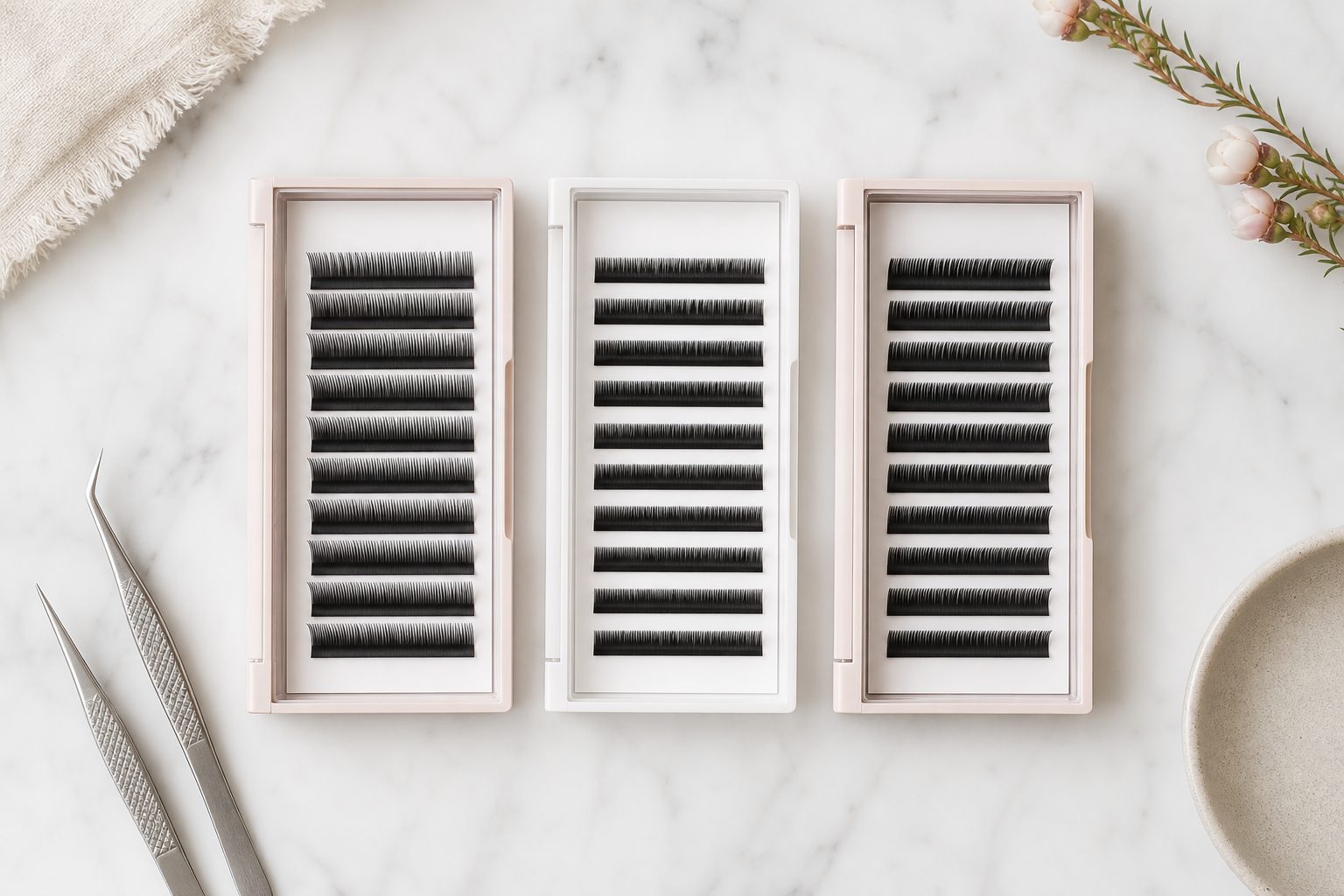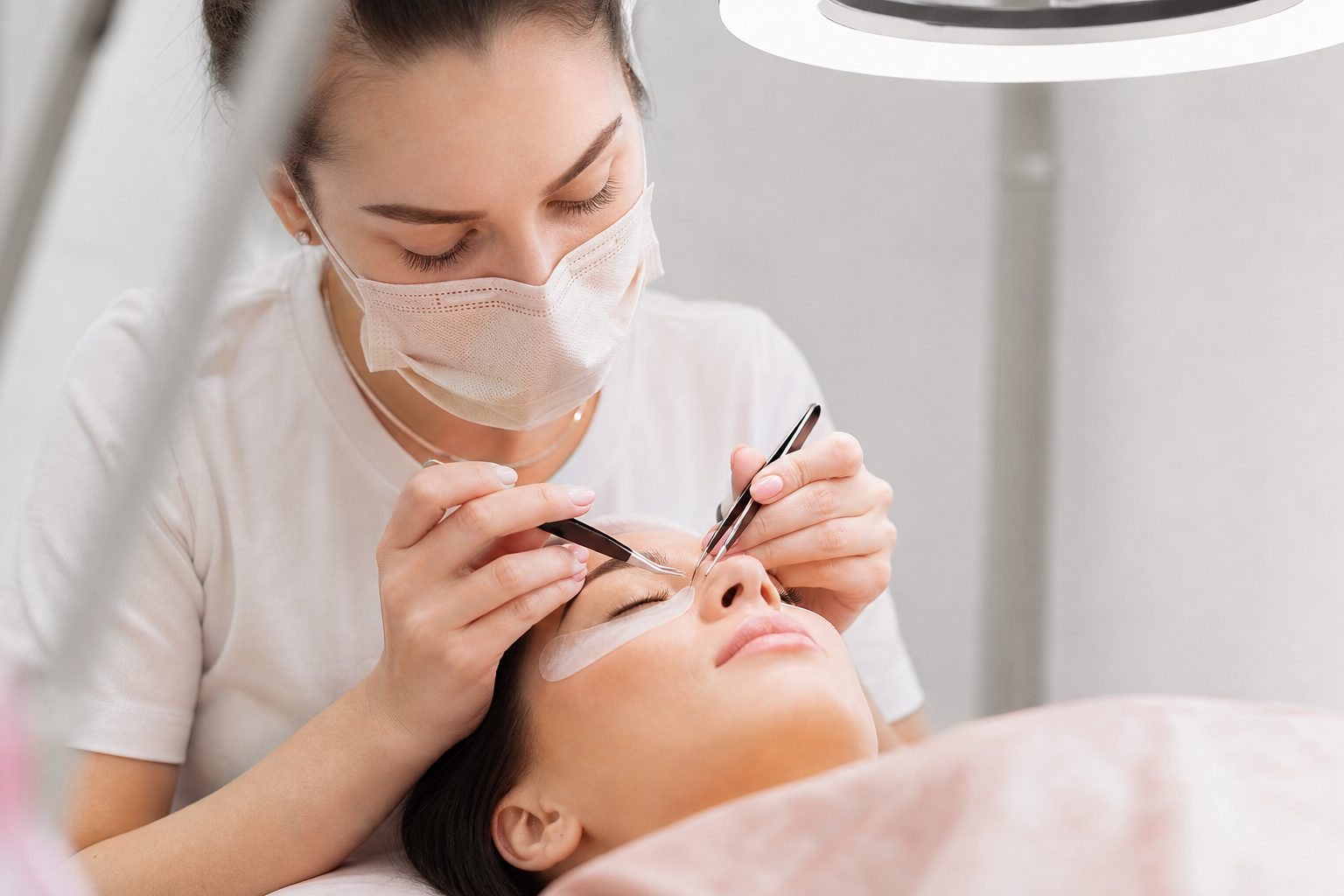
A three week fill cycle is realistic for a new client only if her natural lashes actually hold enough of the set to fill rather than rebuild. The honest test is not the calendar. It is what you see on the lash line at day fourteen to day sixteen, and whether the remaining extensions are evenly distributed or clustered in a few surviving pockets.
Here is the short version. Every natural lash sits somewhere in its own growth cycle, and that cycle runs roughly four to eleven weeks depending on the lash and the person. Shedding two to five lashes a day per eye is normal and healthy. When you apply a full set, you are attaching to lashes at every stage at once, which means the set unwinds on a curve, not a cliff. Three weeks is the point where most clients still have enough to fill economically. For some, that point is closer to two weeks. For a few, it stretches to four.
So the answer for a specific new client is: assume three weeks, book it before she leaves, then let cycle one and cycle two tell you whether to hold, tighten, or extend. Below is how to read the evidence instead of guessing.
What the anagen, catagen and telogen phases mean for fill timing
Natural lashes cycle through three phases. Anagen is the active growth phase, when the lash is still short and still lengthening. Catagen is the transition, when growth stops and the follicle begins to shrink. Telogen is the resting phase, at the end of which the lash releases and a new one begins underneath.
This matters at the bed for one reason. A lash you attach to in early anagen is going to grow out, and it will carry your extension away from the lash line with it, creating that leaning, twisted look clients read as "it went crooked." A lash you attach to in late telogen is going to shed within days no matter how perfect your bond is.
You cannot see the phase directly, but you can see the proxy. Very short, fine, pale lashes are usually early anagen. Skip them or use a much lighter extension. Long, fully mature lashes that sit at the same length as their neighbors are the ones that carry a set for three weeks.
Keep reading: Should I offer classic, hybrid or volume sets when I only have one lash bed?
Why natural shed of two to five lashes a day sets the outer limit
Take the commonly cited normal range of two to five natural lashes shed per eye per day. Treat that as an assumption, not a measurement, because nobody counts it in a studio. Now do the arithmetic in front of the client.
Assume an eye with 100 natural lashes and a full set applied to 80 of them, skipping the babies. At three lashes shed per day, after 21 days she has lost about 63 lash positions. Not all of those carried an extension, so scale it: 80 percent of 63 is roughly 50 extensions gone from that eye. She is walking in with about 30 of her original 80 still attached.
Now run it at five per day. After 21 days that is 105 lash positions, more than she started with, meaning she has effectively turned over her whole line. She arrives with almost nothing. That client is not a three week client. She is a two week client, or she needs a mini fill at day twelve.
Here is the same math laid out so you can price against it.
| Daily shed per eye | Extensions remaining at day 14 | Remaining at day 21 | Practical call |
|---|---|---|---|
| 2 lashes | about 58 of 80 | about 46 of 80 | Comfortable three week fill, could stretch to four |
| 3 lashes | about 46 of 80 | about 30 of 80 | Standard three week fill |
| 4 lashes | about 35 of 80 | about 13 of 80 | Two to two and a half weeks |
| 5 lashes | about 24 of 80 | near zero | Two weeks or a new full set |
These figures come from the stated assumptions above and nothing else. They are a model, not data from your clients. Their value is showing where the cliff is: pricing a three lash shedder and a five lash shedder at the same fill rate means you lose money on one of them every cycle.
Reading retention at the fourteen day mark instead of guessing
The most useful thing you can do with a new client is get eyes on her at day fourteen, even briefly. If your book will not carry a free check, ask for two photos taken in daylight, straight on and slightly downward, eyes closed.
What you are looking for:
- Even thinning across the line. Healthy shed. Her cycle is doing what cycles do. A three week fill will be a fill.
- Gaps concentrated at the inner corner or outer third. Usually application or friction, not cycle. Inner corners take sleeping pressure and cleanser rubbing; the outer third takes pillow contact.
- Extensions that have grown out but are still attached. Excellent retention, and a sign you can extend her interval.
- Bare stretches with visible short regrowth underneath. Her cycle is fast. Shorten the interval.
Write down what you see, with a rough percentage, in her record. Two cycles of that and you are no longer guessing about this client.
Keep reading: What are the most common reasons my clients lose extensions in the first week?
How lash weight, curl and adhesive choice change the interval
Retention is not only biology. Three of your own choices move the interval as much as her cycle does.
Weight. A 0.15 classic extension on a fine natural lash is a lever pulling on a follicle every time she blinks. The general standard is that the extension should not exceed the weight the natural lash can carry, which in practice means dropping diameter as you go longer. A 0.15 at 12mm and a 0.15 at 15mm are very different loads.
Curl. A strong curl such as D reduces the contact surface between the extension base and the natural lash, because the extension curves away sooner. Same adhesive, same technique, less bond. Clients who want dramatic curl and long wear are asking for two things that pull against each other, and it is fair to say so.
Adhesive. Cyanoacrylate adhesives cure by reacting with moisture in the air. Every adhesive has a humidity and temperature range printed on the bottle, and outside that range the cure is either too fast, giving a brittle shock cure, or too slow, leaving a bond that never fully hardens. If your studio sits in a dry winter apartment at 25 percent relative humidity and your adhesive wants 45 to 55 percent, your retention problem is environmental, and it will make every client look like a fast shedder.
Setting the first fill date at the end of the full set appointment
Book the fill while she is still in the chair, before she stands up. Not by text later. The conversion difference between rebooking at the bed and rebooking by message is the single largest lever most solo artists have, and it costs nothing.
A sequence that works:
- While she is checking the mirror, say the interval out loud as a fact, not a question: "You are on a three week cycle, so I am putting you in on the twenty-fourth."
- Offer two specific slots, not an open calendar. Choice between two is easy; choice among thirty is a decision she postpones.
- Take the deposit or card on file at the same moment. The appointment is real when money touches it.
- Tell her the mini fill window exists: "If you notice thinning early, message me, I keep a couple of short slots each week."
- Send the aftercare in writing before she reaches her car, so it lands while the appointment is still emotionally fresh.
A client who leaves without a date is not a client with a flexible schedule. She is a client you will spend money to win back.
See how LashRetention handles this for lash and brow studios
Adjusting the interval after two documented cycles
Two cycles is enough evidence. Use a simple rule you can apply in ten seconds at the bed.
- Arriving with roughly half or more of the set still attached, evenly: extend by three to seven days next cycle.
- Arriving with roughly a third attached: hold the interval. This is the target zone for a profitable fill.
- Arriving with under a quarter attached, twice: shorten to two weeks, or move her to a longer appointment priced as a partial set.
- Arriving with under a quarter attached once, then fine the next cycle: look at what changed in her life, not her lashes. Travel, illness, a new cleanser, a hot yoga phase.
Note the change in her record with the reason. Six months later, when she asks why she pays for three weeks and her friend pays for four, you will have the answer in front of you.
What to do when a client insists on stretching to six weeks
At six weeks, on any of the shed rates above, there is essentially nothing left to fill. The appointment is a removal plus a full set, and it should be priced and scheduled as one. The failure mode is agreeing to call it a fill, blocking ninety minutes, then spending two and a half hours rebuilding for fill money.
Say it plainly and give her the choice: "Past four weeks it becomes a full set, both in time and in price. I would rather see you at three and keep it easy." Then hold the line in your booking rules, not just in conversation. If she books a fill at day forty, the appointment gets converted before you touch her, not after.
Where to take this next
None of this works from memory. It works when each client has a record: her interval, her day fourteen number, what you changed and why, and whether she rebooked at the bed. That is exactly what LashRetention is built to hold. It tracks the fill cycle per client, scores retention across cycles so the fast shedders separate themselves from the four week clients, prompts the rebook while the appointment is still open, and sends the aftercare in writing so it is never just something you said.
Start with your next ten new clients. Set the first fill at three weeks, log day fourteen, adjust after cycle two. By the end of the quarter you will be booking intervals from evidence, and your chair will not sit empty in week five.