Toward a mixed menu, and toward studios that make their money on chair hours rather than on appointment count. If lifts and brow services are climbing in your books while full sets flatten, the direction is not decline. It is a shift from a high frequency, high maintenance service to a lower frequency, lower maintenance one, and that shift changes the shape of your week more than it changes your annual revenue.
The risk is real, though, and it is specific. A lift client returns every six to eight weeks. An extension client on a healthy cycle returns every three. Swap one for the other without adjusting price, chair time or menu, and you have quietly cut your visit count in half.
What follows is how the economics actually differ, what to add and in what order, and where the regulatory ground is less settled than the marketing suggests.
Why lower maintenance services attract the client who dropped off
Think about who leaves extensions. Rarely the person who hates the look. Usually the person who loves the look and cannot sustain the routine: the daily cleansing, the no oil rule, the sleeping position, the standing appointment every three weeks, the ongoing cost.
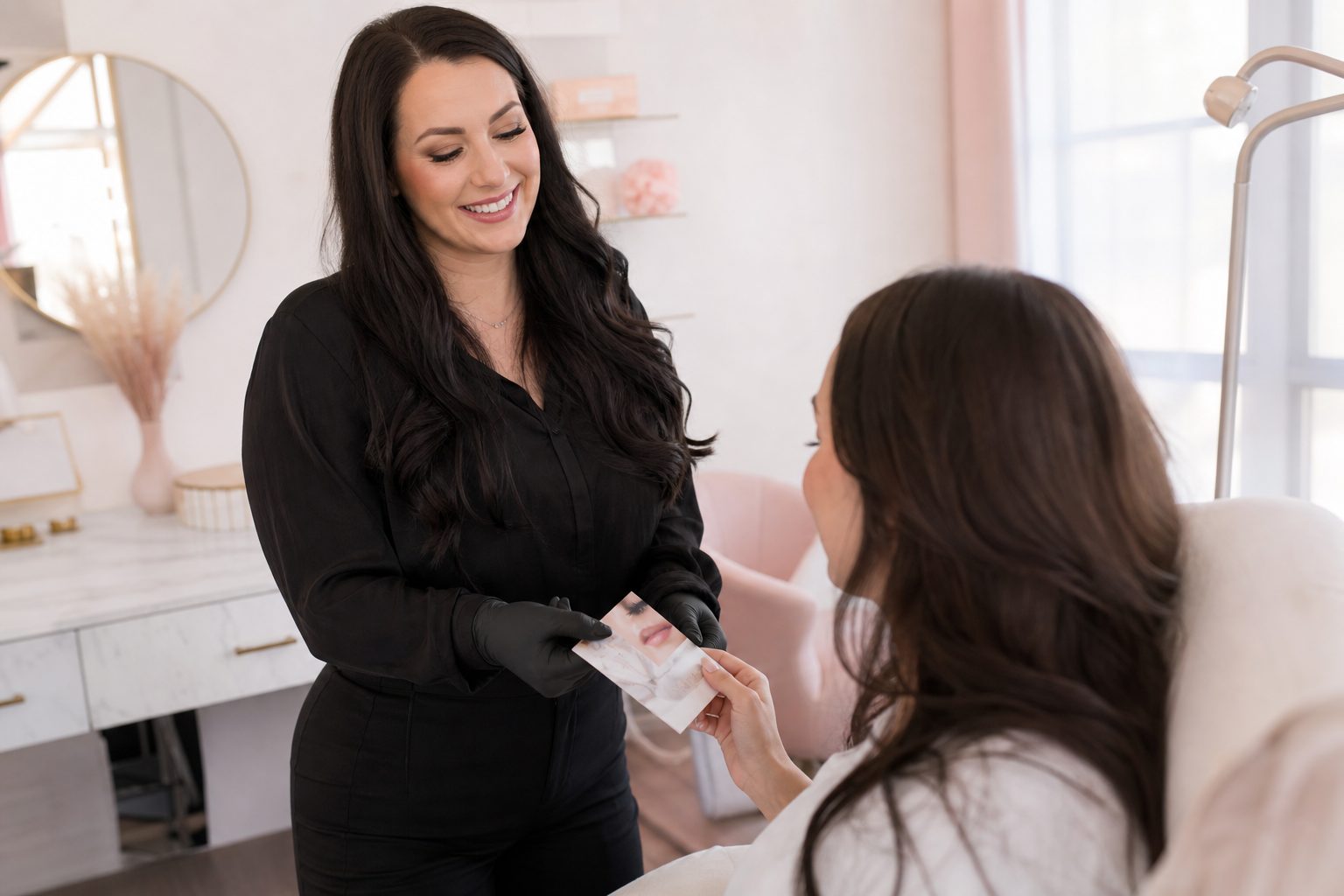
A lift and tint answers all of that at once. Her own lashes, curled and darkened, no aftercare beyond keeping them dry for a day, nothing to break, nothing to fall off unevenly before a wedding. She comes back in six or seven weeks because the growth cycle has caught up, not because maintenance failed.
Brow work pulls a similar client for similar reasons. Lamination, tinting and shaping give a visible result with almost no ongoing obligation.
Two things follow for your book. First, some of your lapsed extension clients are not lost, they are mismatched, and a lift offer is the natural reactivation message. Second, a lift client is a genuinely different retention problem, because the thing that brings her back is biology on a fixed schedule rather than a bond that degrades.
Keep reading: What should I check before every single client leaves my lash chair each day?
Revenue per chair hour across lifts, tints and full sets
Compare services on revenue per chair hour, including turnaround, and the picture stops being obvious. Use your own prices and times, but here is the structure with plausible figures stated as assumptions.
| Service | Price | Chair time incl. turnaround | Per chair hour | Return window |
|---|---|---|---|---|
| Classic full set | $175 | 2.5 hrs | $70 | New client |
| Classic fill | $75 | 1.25 hrs | $60 | 2 to 3 weeks |
| Volume fill | $95 | 1.5 hrs | $63 | 2 to 3 weeks |
| Lash lift | $95 | 1 hr | $95 | 6 to 8 weeks |
| Lash lift and tint | $120 | 1.25 hrs | $96 | 6 to 8 weeks |
| Brow lamination and tint | $110 | 1 hr | $110 | 6 to 8 weeks |
| Brow shape and tint | $55 | 0.5 hr | $110 | 4 weeks |
Read the last two columns together, because the fourth column alone will mislead you. A lift earns more per hour and returns half as often. Over a year, one lift client at seven weeks is roughly 7.4 visits at $120, or about $890. One classic fill client at three weeks is about 17 visits at $75, or about $1,275, before you count the initial set.
So extensions still win on annual value per client, and lifts win on hourly yield. Which one wins for you depends entirely on whether your chair is full. If you have empty hours, take the higher annual value. If you are turning people away, the higher hourly rate is the better use of the seat.
What a lift and tint client costs you in product
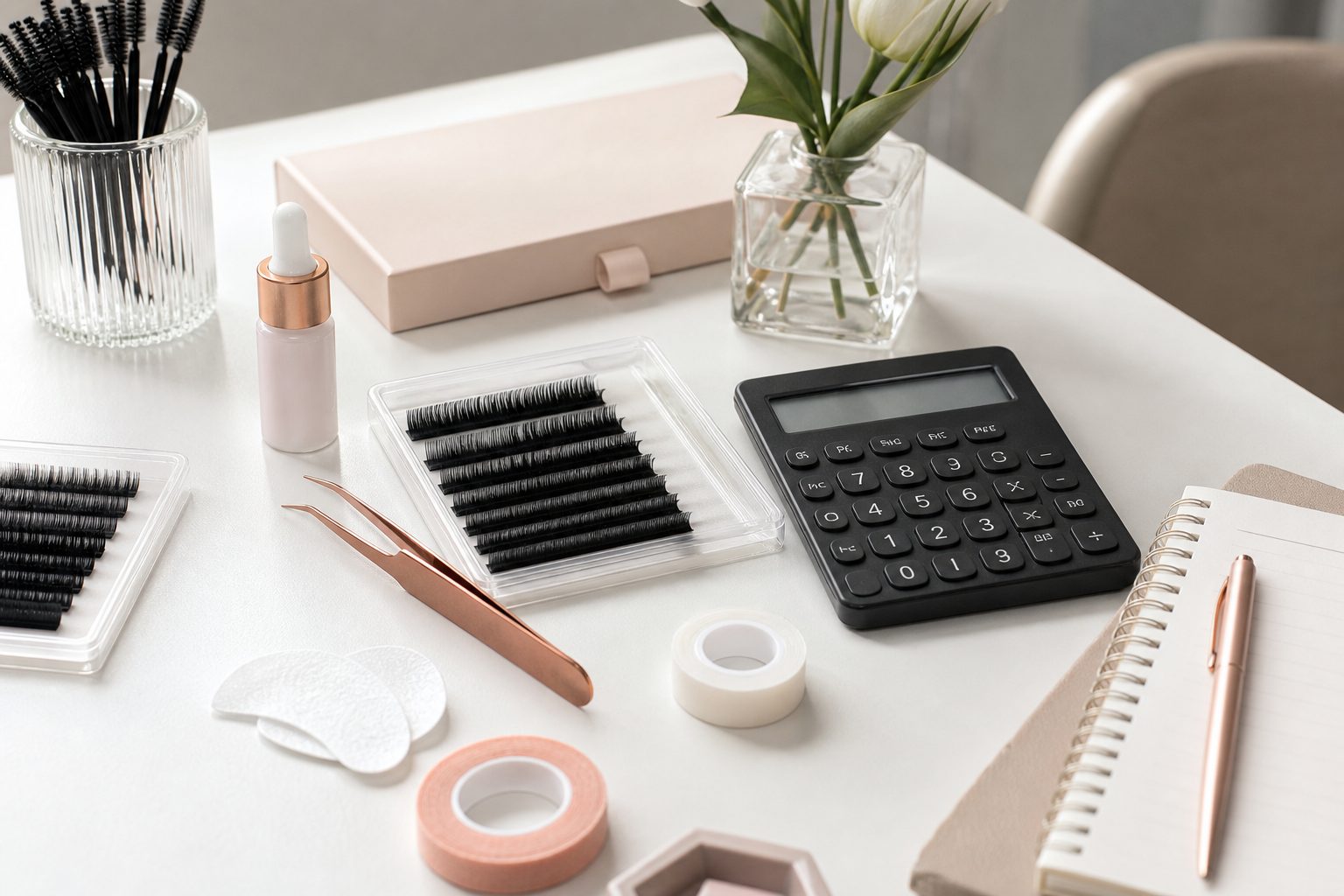
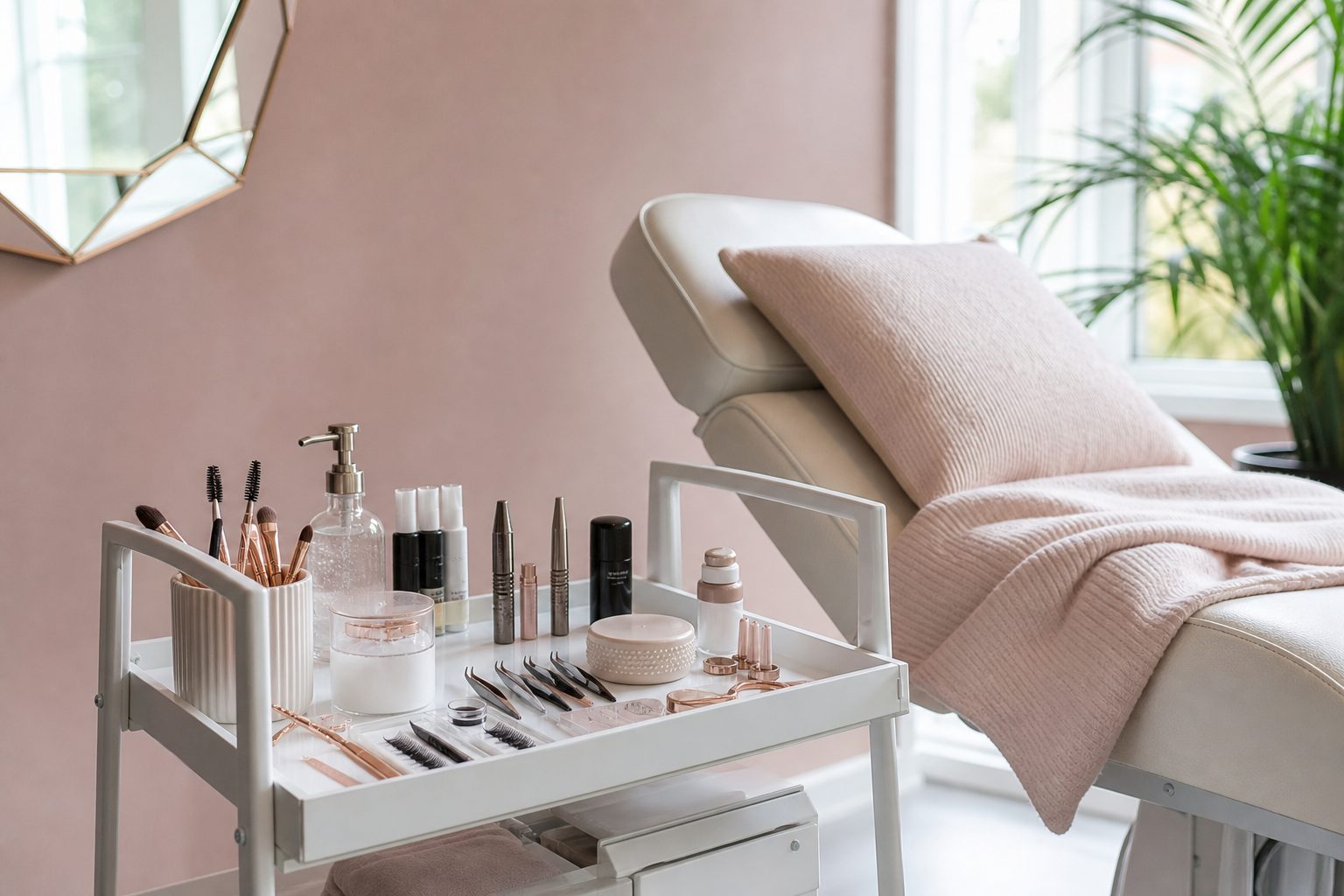
Product cost per service is the number most artists guess at. Build it once, from what is actually on your trolley.
- Lift and set solutions, sold in sachets or small pots. Divide the pot price by realistic services per pot, and be honest about waste and shelf life after opening.
- Silicone shields or rods, reusable if disinfected, so amortize the set across its life.
- Adhesive or lift glue for the shields, plus a nourishing serum at the end.
- Tint and developer, again per service after dividing the tube.
- Single use consumables that are not optional: microswabs, gel pads or tape, cotton rounds, gloves, spoolie.
Work it as an example. Suppose lift solutions come to $6 per client, shields amortize to $1, tint and developer $2, serum $1, and consumables $4. That is $14 of product on a $120 service, so about 12 percent. Those are illustrative assumptions, not benchmarks. Run yours.
Then compare honestly against a volume fill, where premade or handmade fans, adhesive with a short open life once opened, tape, pads and swabs typically land in a similar single digit dollar range. Product is rarely the deciding factor between these services. Time is.
Keep reading: How much does a full set of volume lashes really cost me in product and chair time?
Brow lamination and the regulatory questions it raises
Lamination uses a thioglycolate based cream to soften the hair structure, then a neutralizer to reset it. Chemically it belongs to the same family as a perm. That is why the regulatory questions are sharper than the marketing suggests.
Three things to check in your own state's rules before you put it on the menu:
- Scope. Does your license category permit chemical services on hair of the face? Some specialty lash licenses do not. Some esthetics scopes address tinting explicitly and lamination not at all.
- Tint approval. Eyelash and eyebrow dyes occupy an unusual position in federal cosmetic law, and several states restrict or prohibit tinting outright. Confirm your state's position rather than assuming, because the answer varies more than for any other service on this list.
- Patch testing and consent. Whether or not it is mandated, a 48 hour patch test and a signed consent noting any prior reaction is the practice that protects you. Keep the record with the client file.
Also keep the safety data sheets for lamination and tint products alongside your adhesive sheets, and label everything you decant. The chemistry is stronger than lash adhesive and the client's eyes are just as close.
Retail aftercare as a second revenue line rather than an upsell
Most artists treat retail as an awkward add on at checkout. Treat it instead as part of the service outcome and it stops feeling like selling.
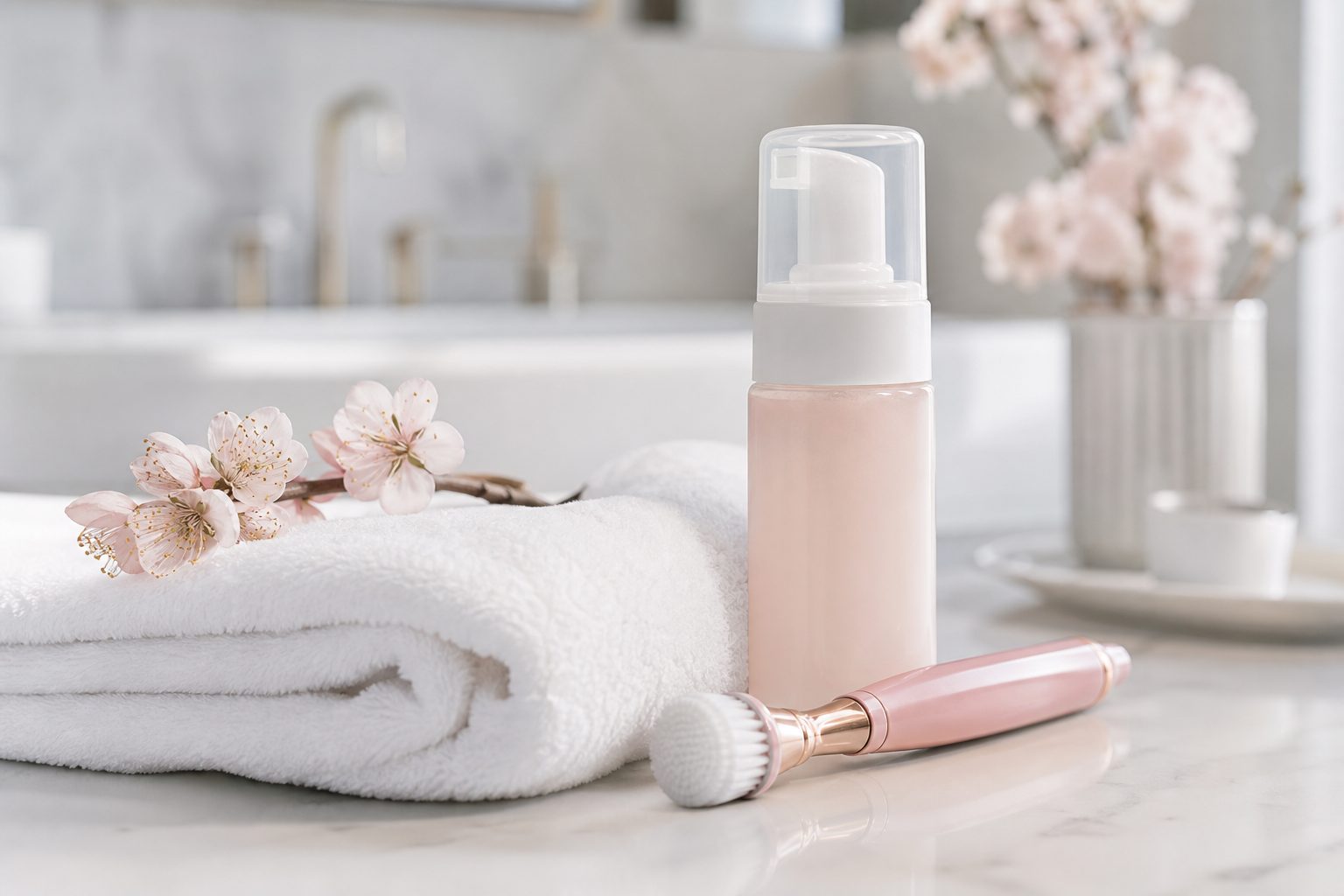
The logic is straightforward. A lash safe foaming cleanser, a clean spoolie and a serum are the things that determine whether her result looks good in week two. You are not persuading her to buy something. You are supplying the thing the service requires.
The arithmetic is modest but steady. At a $28 cleanser with a typical wholesale to retail markup, on three sales a week across 46 weeks, that is 138 units and a meaningful four figure margin contribution a year for roughly zero added chair time. Substitute your own price and your own realistic attachment rate before you count on it.
Two rules that make it work. Hand it to her during the aftercare conversation, not at the register. And stock two or three items you genuinely use, not a shelf of options that ties up cash and expires.
See how LashRetention handles this for lash and brow studios
How a mixed menu changes your rebooking rhythm
This is where studios get caught. A pure extensions book has one rhythm, and you can carry it in your head. A mixed book has at least three, and you cannot.
Different return windows, different reasons to return, different aftercare, different prompts. The lift client who is not contacted at week six does not think about you again until week twelve, and by then she has tried someone else.
The practical fix is to stop thinking in appointments and start thinking in cycles per client. Every active client has a service, an interval that suits it, a date she was last in, and a date she is due. The menu can be as wide as you like as long as something is holding those four facts for every name.
Rebooking at the chair still matters most. But the follow up that catches the ones who did not prebook has to fire on the right clock for the service they had, or it is noise.
Skills worth training now versus waiting to see
A rough triage for where to spend training money and days out of the chair.
Train now. Lash lift and tint, if your state permits it, because it directly recaptures the client who quit extensions. Brow shaping and tinting, because it is short, high yield per hour, and it fills the awkward 30 minute gaps that otherwise pay nothing.
Train next. Brow lamination, once you have confirmed scope and tint rules, and once you have a patch test process you actually follow. Advanced volume and mega volume, if your market supports the price, because it defends your top end against studios competing on classic sets alone.
Wait and watch. Anything requiring a device purchase in the thousands, anything needing a separate license or medical oversight, and anything whose demand you have inferred from social media rather than from clients asking you for it by name. Let someone else pay to discover whether it lasts.
The test is simple. Has a real client on your books asked for this in the last three months? Two yeses beat any trend forecast.
Building the menu around the cycle
The studios that handle this shift well are not the ones that guessed the trend correctly. They are the ones that knew, per client, what she had, when she was last in, and when she is due, so a change in service mix showed up as a scheduling adjustment rather than a slow leak.
LashRetention tracks the fill cycle per client with a retention score, sends the rebooking prompt on the interval that service actually needs, and puts the right aftercare in her hand after each visit. Set your intervals per service, add lifts and brow work to the menu, and let the rhythm stay intact while your menu changes shape.