A client who trains five days a week will usually hold a set for less time than a client who does not, and the difference shows up as a fill interval that needs to be shorter rather than as a set that fails outright. The cause is not one dramatic event. It is repeated cycles of heat, moisture and salt on the bond, plus more frequent cleansing, plus the simple fact that she touches her face more.
The good news is that this is a manageable client, not a difficult one. Adapt the weight, the curl, the adhesive handling and the interval, and she becomes one of the most reliable names in your book because she has a standing reason to come back on schedule.
What follows is a field level account of what artists tend to observe with high sweat clients and what to change. Where numbers appear they are worked examples from stated assumptions, not survey findings.
How moisture and heat interact with a cured cyanoacrylate bond
Lash adhesives are cyanoacrylates. They cure by reacting with moisture, which is why humidity in your room speeds curing and why a bone dry winter studio slows it down. That same chemistry is the reason moisture afterwards is not simply neutral.
A fully cured bond is a hard polymer. Hard polymers are strong in tension and comparatively brittle under repeated flexing, and heat softens then re-hardens them across cycles. A gym client puts that bond through a hot, wet, salty environment, then a cool shower, then a towel, then a blow dryer, several times a week. It is a fatigue problem more than a dissolving problem.
Salt in sweat is worth naming separately. As sweat evaporates it leaves a residue on the lash line and in the bond area, which builds film and interferes with the adhesion between the extension and the natural lash if it is not cleansed off.
Steam rooms and hot yoga are a different category
Sustained high heat with saturated humidity is the harshest case, harsher than a run. If she does 40 minutes of hot yoga four times a week, treat her as your shortest interval client and say so at the consult.
Keep reading: How do I know whether my three week fill cycle is realistic for a new client?
The first forty eight hours and why they matter most
Manufacturers commonly advise keeping a new set away from steam, saturation and heavy sweat for the first 24 to 48 hours while curing completes. Follow the window your specific adhesive states.
For most clients this is an inconvenience. For a five day a week trainer it is a scheduling problem, and if you do not solve it out loud she will simply train anyway and blame your work.
Solve it at booking. Ask which day is her rest day or her lightest day and book her the evening before it. A Saturday evening appointment before a Sunday rest day gives the bond a genuine cure window. That one question, asked at rebooking, does more for her retention than any product change on this list.
What daily gym clients report about weeks two and three
The pattern artists describe is consistent in shape: the first ten days look normal, then the drop steepens through week two, and by day 21 the set looks noticeably sparser than a comparable non training client at the same day count.
Shedding also skews. Inner corners and the lower outer edge tend to go first, because those are the zones she rubs when wiping sweat and the zones a towel catches.
To make this concrete, take a set of 100 extensions and assume a typical client is at 45 remaining on day 21. If a high sweat client is losing at a rate that leaves her at 45 remaining on day 15 instead, her fill is due six days earlier. That is not a failure of your work. It is a different maintenance schedule, and it should be treated as a scheduling fact rather than a complaint.
This is exactly the kind of pattern that only becomes visible if you record what you saw at the start of each fill. Two logged visits look like anecdotes. Five look like a curve you can price against.
Keep reading: Should I offer classic, hybrid or volume sets when I only have one lash bed?
Adjusting extension weight and curl for high sweat clients
Every gram of leverage on the natural lash works against a bond that is being fatigued. Reduce the load.
- Drop total weight. If you are building 5D fans at 0.07, move to 4D or step the diameter down to 0.05 or 0.03 for the same fan count. Same darkness, less mass on the lash.
- Shorten by one to two millimeters. A 13 mm extension has more lever arm than an 11 mm one. On a client whose bonds are stressed daily, length is the most expensive choice you can make.
- Ease the curl. A dramatic D curl contacts the natural lash across a shorter surface than a C or CC. More bond surface is more grip. If she wants lift, get it from mapping and length placement rather than from curl alone.
- Watch base placement. Consistent, close, wrapped bases matter more here than anywhere. A bond that is only touching at one point survives a normal week and fails a gym week.
Set expectations honestly at the consult. You are not refusing her the look. You are trading two millimeters of length for two weeks of wear, and most clients take that trade willingly when it is explained as a trade.
Cleanser choice and the oil residue problem
She needs to cleanse more often, not less, which surprises clients who assume washing is what removes lashes. Salt and sebum left on the lash line are worse for the bond than a daily foam cleanse.
The failure point is usually what else is on her face. The common culprits in a gym routine:
- Oil based or micellar makeup removers used before or after training
- Heavy moisturizers and facial oils applied at night that migrate to the lash line
- Sunscreen for outdoor training, which is often oil rich
- Two in one cleansing wipes carried in a gym bag
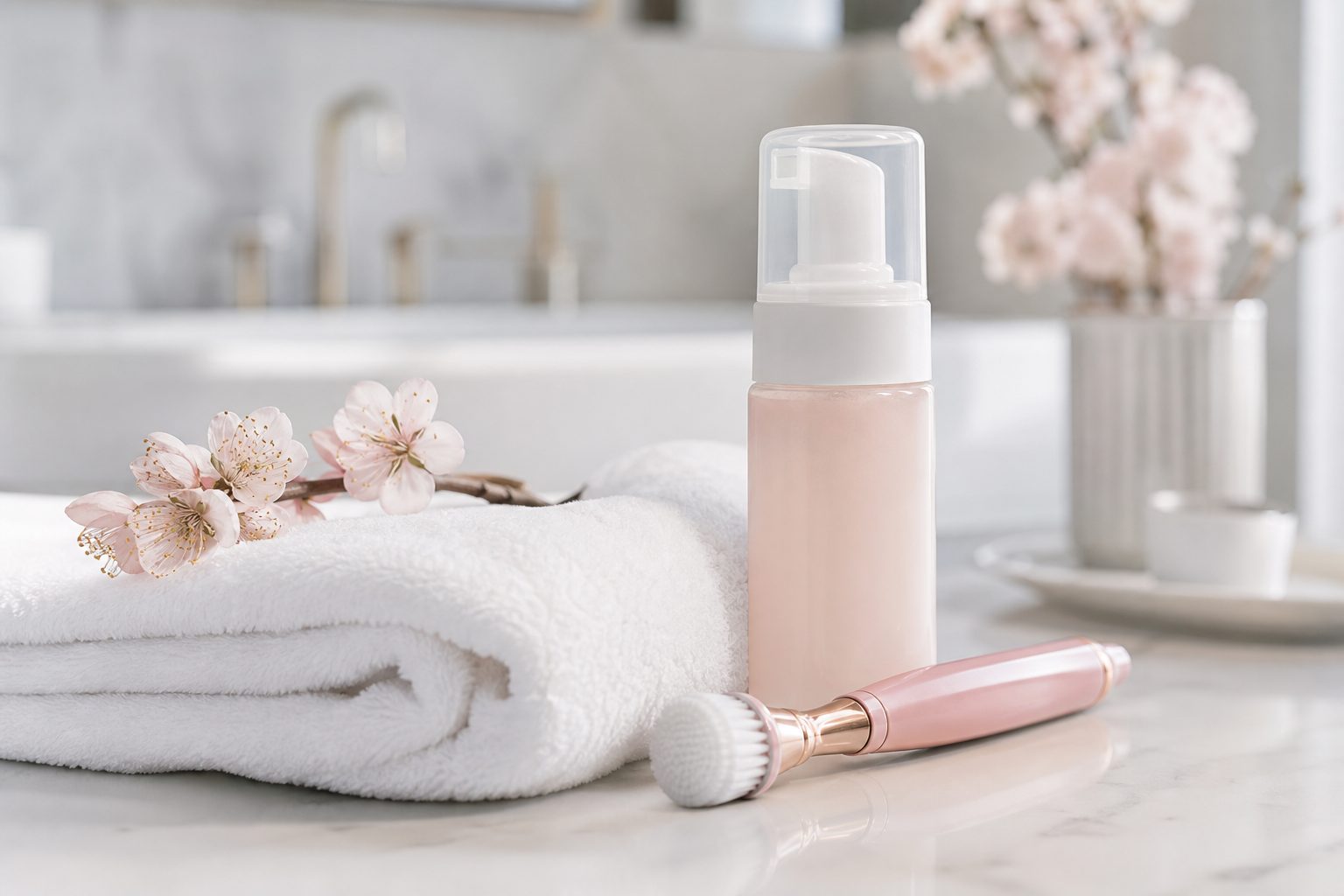
Give her a specific routine rather than a prohibition. Foam cleanser and a soft lash brush after every training session, rinse thoroughly, pat dry, then dry with a cool blow dryer or a small fan for thirty seconds. Recommend an oil free sunscreen for the eye area. Wet lashes clumping together and then drying in that position is a large part of why sets look thin, and it is fixed by drying rather than by any product.
See how LashRetention handles this for lash and brow studios
Setting a shorter fill interval and pricing it honestly
Do not put her on the same schedule as everyone else and then feel resentful about the fill length. Put her on a schedule that matches her lash cycle and price the service by the actual chair time.
A workable structure:
| Client type | Interval | Typical fill length | Priced as |
|---|---|---|---|
| Standard | Every 3 weeks | 75 to 90 minutes | Standard fill |
| High sweat, 4 to 6 sessions a week | Every 2 weeks | 50 to 65 minutes | Express or two week fill, lower price |
| High sweat, stretched to 4 weeks | As booked | 110 minutes plus | Extended fill or full set price |
The two week fill should genuinely cost her less per visit than a three week fill, because it takes you less time. She will spend more per year, which is fine and honest, and her lashes will look good for all of it rather than for half of it. That is a better deal for her than four week fills that look thin for ten days out of every twenty eight.
Coaching the client without blaming her routine
Never open with what she is doing wrong. She is not going to stop training, and framing her fitness as the problem makes you the person she stops seeing.
Language that works, with the reason attached:
- "Your lashes are on a two week cycle because you train, the same way your running shoes wear faster than someone who walks. Nothing is wrong."
- "I am going to build these a touch lighter so they hold through your week. You will not see a difference in the mirror, you will see it on day twelve."
- "The one thing that changes everything is drying them after you shower. Thirty seconds with a fan."
Then check the specifics: her cleanser, her sunscreen, whether she sleeps face down, whether she is rubbing her eyes with a towel rather than blotting. One of those is usually the variable that turns a mediocre result into a good one.
Turning her into your most predictable client
The high sweat client has structure other clients lack. Her training week is fixed, her rest day is fixed, and her interval is short and knowable. Once you have logged two or three of her fills you know her number, and she becomes a name that occupies the same slot every other Thursday for years.
That only happens if the interval is tracked per client instead of by a single studio wide rule. LashRetention holds each client's own fill cycle, scores what retention actually looked like at the last few visits, and sends her rebooking prompt and aftercare reminder on her schedule rather than the average one.